This investment hypothesis is built on a higher-quality revenue mix substantially improving the bottom line, not yet recognized by the market. It is supported by a classic “bet on the Jockey”, and I expect future growth to dominate the narrative as the core business transformation materializes. Plus, we have free upside optionality from an upcoming FAA approval (FY27).
Let’s tuck in!
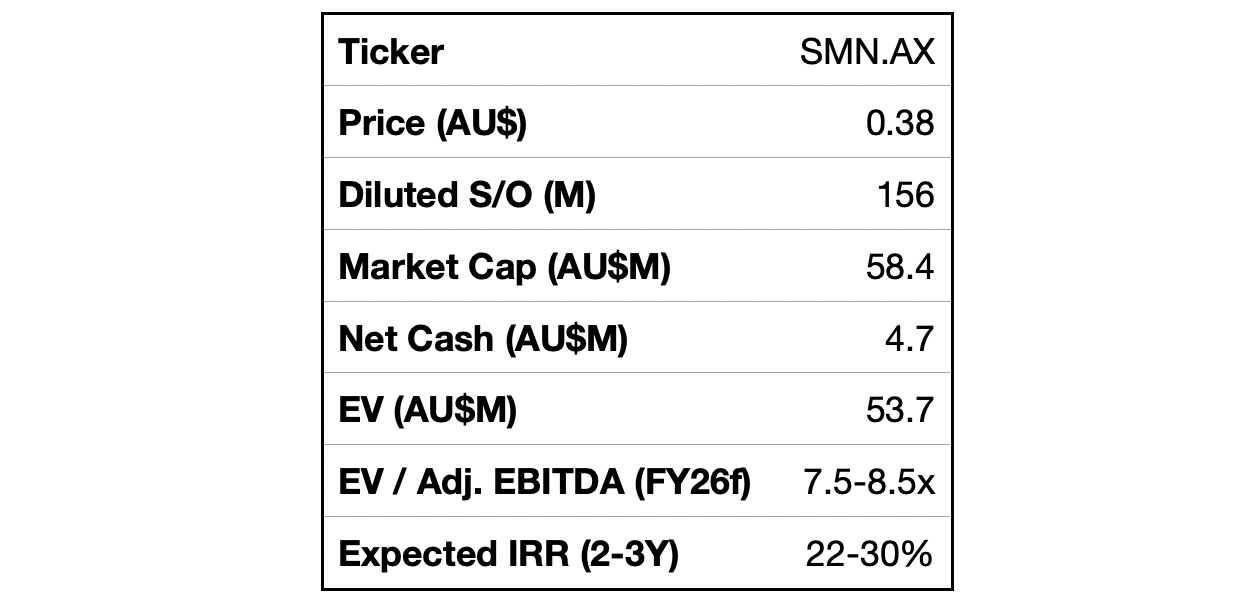
Executive Summary
Structural Monitoring Systems (“SMN”) spent most of the last two decades as a perpetual “future aerospace technology” story centered around Comparative Vacuum Monitoring (CVM), a crack detection system designed for aircraft structures.
Investors have been waiting many years for its commercialization, but it never arrived. Or just not yet. I believe that repeated delays around certification and adoption has gradually exhausted shareholder patience. Typical effect of the over-promise but under-deliver story.
That narrative is now outdated IMHO.
In 2017, the company acquired Anodyne Electronics Manufacturing (“AEM”), and in 2021, Eagle Audio. Under the hood, this has allowed SMN to quietly evolve into a profitable avionics and aerospace electronics business with improving margins, proprietary product exposure, and a net cash balance sheet.
Underlying avionics margins were historically suppressed by both lower-quality contract manufacturing and insufficient scale to drive operating leverage. Today, management is prioritizing proprietary avionics revenue. Revenue growth may appear modest near term, but EBITDA margins and earnings quality are stepping up.
So, the market still appears anchored to the old narrative:
speculative CVM technology,
years of dilution,
and weak historical profitability.
Meanwhile, the actual business underneath has changed.
CVM remains part of the story, but it is no longer the core thesis. If anything, it represents a positive asymmetry.
After listening to the Dec-25 AGM and Apr-26 Q3 update [you can find them here], I would add that CVM can be a strong short-term catalyst to lift sentiment. I have the impression that a legacy cohort of investors remains strictly focused on this tech, missing the big picture.
The core thesis is much simpler: SMN is becoming a higher-quality aerospace electronics company while the market still values it like a perpetually delayed technology project.
Business Overview
Through AEM, SMN operates across three aerospace-related business lines:
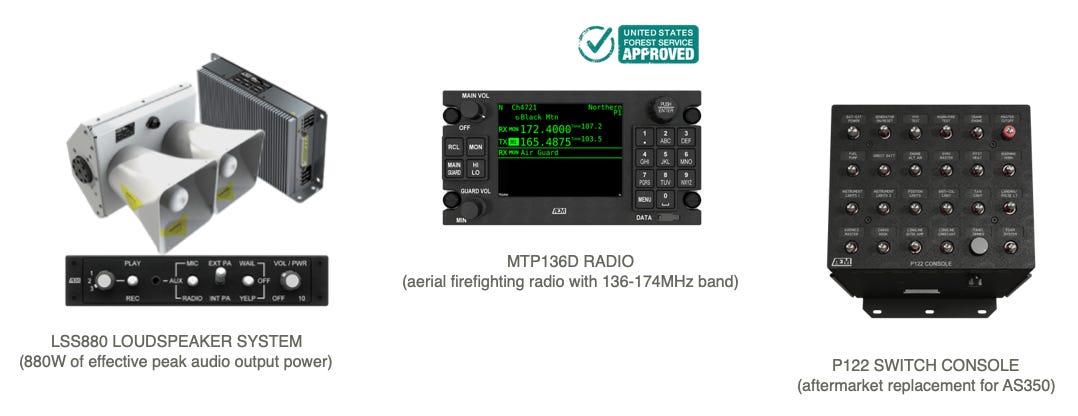
AEM Avionics: the design, development, and manufacture of aircraft communication systems, loudspeaker systems, mission radios, avionics consoles and caution/warning panels for the special mission fleet market.
AEM Contract Manufacturing: contract electronics manufacturing to multiple aerospace customers.
Comparative Vacuum Monitoring (CVM): the development, manufacture and sale of Smart Sensor Solutions technology and test equipment for structural crack detection of commercial airframes.
The company originally listed on the ASX in 2004, primarily to fund the development of CVM technology.
CVM reduces aircraft inspection time for airlines by identifying microscopic structural cracks without requiring extensive maintenance. The technology was developed alongside major aerospace stakeholders including Boeing, Airbus, Embraer, and the FAA.
However, as is common with aerospace inspection technologies, certification and commercialization timelines turned out to be far longer than initially expected.
After years as a single-technology company, SMN diversified through acquisitions:
AEM was acquired in 2017 for approximately CA$10M (~5x normalized 5-year EBITDA), and
Eagle Audio followed in 2021 for approximately CA$4.3M (~2x EBITDA).
These acquisitions transformed the business mix. However, integration challenges, COVID-related disruptions, and lack of operating leverage in the avionics segment initially obscured the underlying improvement in economics.
That transition now appears to be reaching an inflection point.
Why Has The Story Changed?
The improvement in business quality is showing up in the financials:
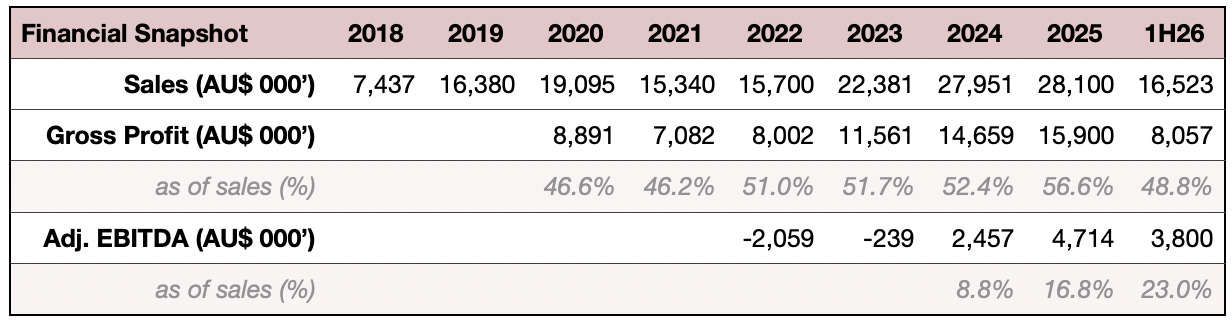
For years, SMN’s financial profile was dominated by contract manufacturing revenue.
Management is now actively changing that mix, and avionics has significantly higher incremental economics and deserves a higher multiple.
The strategy appears straightforward:
prioritize profitable manufacturing work (above 30% gross margin),
benefit from marginal capacity from AEM Avionics, and
increase exposure to proprietary avionics products with structurally higher margins as business scales, and new products and markets are introduced.
We can already see that in the mix shift:
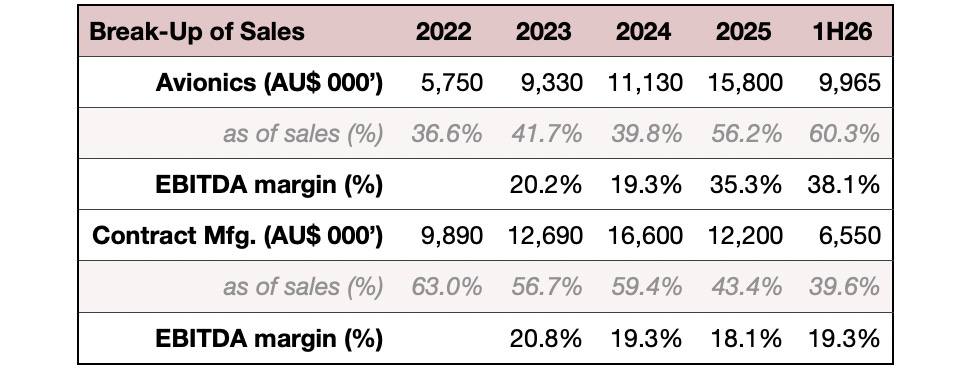
As avionics grows to nearly two-thirds of the revenue, we should see EBITDA margins keep improving even if consolidated sales remain relatively flat in the short term.
Importantly, this shift has already become visible operationally:
five consecutive profitable quarters,
improving Adj. EBITDA margins (from 8.8% in FY24 to 23% in 1H26),
stronger earnings quality, and
a cleaner balance sheet with net cash.
The appointment of Rick Freeman further strengthens the turnaround narrative.
Freeman has prior experience across aerospace electronics, turnarounds, and operational restructuring. Based on his two presentations to date (the Dec-25 AGM and the Apr-26 Q3 update), the focus is clear on profitability and returns rather than pursuing low-quality revenue growth.
At the AGM, Rick emphasized how important it is for him to be profitable every quarter, never run out of money, and moving toward a AU$100M sales company by FY30! It is an ambitious goal, but I am happy to let him work while we track the progress.
Historically, SMN looked like a company chasing commercialization. Today, it has evolved into an aerospace electronics operator, and the market has not fully recognized this shift yet.
Why Does The Opportunity Exist?
I believe the opportunity exists primarily because current investors remain anchored to the CVM program and the company is still in the pre-discovery phase (ASX listing, micro-cap, not AI).
For many shareholders, SMN is still associated with:
years of dilution,
inconsistent profitability,
delayed CVM commercialization,
and weak shareholder returns.
Added to that, a litigation case between the company and the ex-CEO did not help. However, it is now resolved.
Those concerns were valid historically.
But they may no longer reflect the current business.
The market still appears focused on whether CVM eventually succeeds commercially, while paying insufficient attention to the improving economics of the avionics business already operating underneath.
This disconnect is important because the thesis does not require meaningful CVM success to work.
Even without assigning value to CVM, SMN now owns:
a profitable avionics platform with proprietary aerospace products,
a debt-free balance sheet for internal development or bolt-on M&A, and
an improving operating leverage with management focused on margin discipline.
In my view, investors waiting exclusively for a “CVM breakthrough” are missing the actual transition occurring inside the business today.
Valuation
SMN has historically traded on future potential rather than demonstrated earnings power. That dynamic is finally changing.
If the company can reach roughly AU$7-8M in EBITDA as avionics becomes a bigger slice of sales, I believe the business deserves a higher multiple than today’s 7.5-8.5x (FY26f).
Note on Valuation, FCF & ROIC:
Rent Adjustment: I estimate annual rent costs at around AU$1.2–1.6M, and include this in the valuation as IFRS overlooks this real expense.
Adjusted FCF: Factoring these rent costs into the reported YTD9M FCF results in an annualized AU$5.2M, a not too shabby 10.5x EV/FCF. As a cross-check, this reflects a reasonable 70–80% EBITDA-to-FCF conversion.
Normalized ROIC: I estimate a normalized Return on Invested Capital FY26 will sit around 10-12%. Not fantastic, but moving in the right direction. [This remindes me of the transition in ROIC from worst to best and its connection to shareholder returns discussed in M. Mauboussin’s article (2023).]
Higher-quality aerospace electronics and avionics players with proprietary content usually trade at higher EBITDA multiples (14-17x) than simple contract manufacturers (8-10x).
Applying a 12x EBITDA multiple (base case) to AU$8M of normalized EBITDA implies an enterprise value of approximately AU$96M. Factoring in the net cash position results in an equity value closer to AU$100M versus a current market cap near AU$58.4M.
That suggests meaningful upside (70%+) even without assigning material value to CVM.
Longer term, if management successfully executes the transition toward a more proprietary avionics-focused business model, the upside could be substantially larger than my base case.
What About CVM?
CVM remains a potentially valuable asset, but I do not believe investors need to underwrite its success for the thesis to work.
The technology has already demonstrated technical feasibility. The primary issue historically has been commercialization speed and certification timelines.
FAA progress and initial airline adoption around Boeing 737NG applications could materially improve investor sentiment over time.
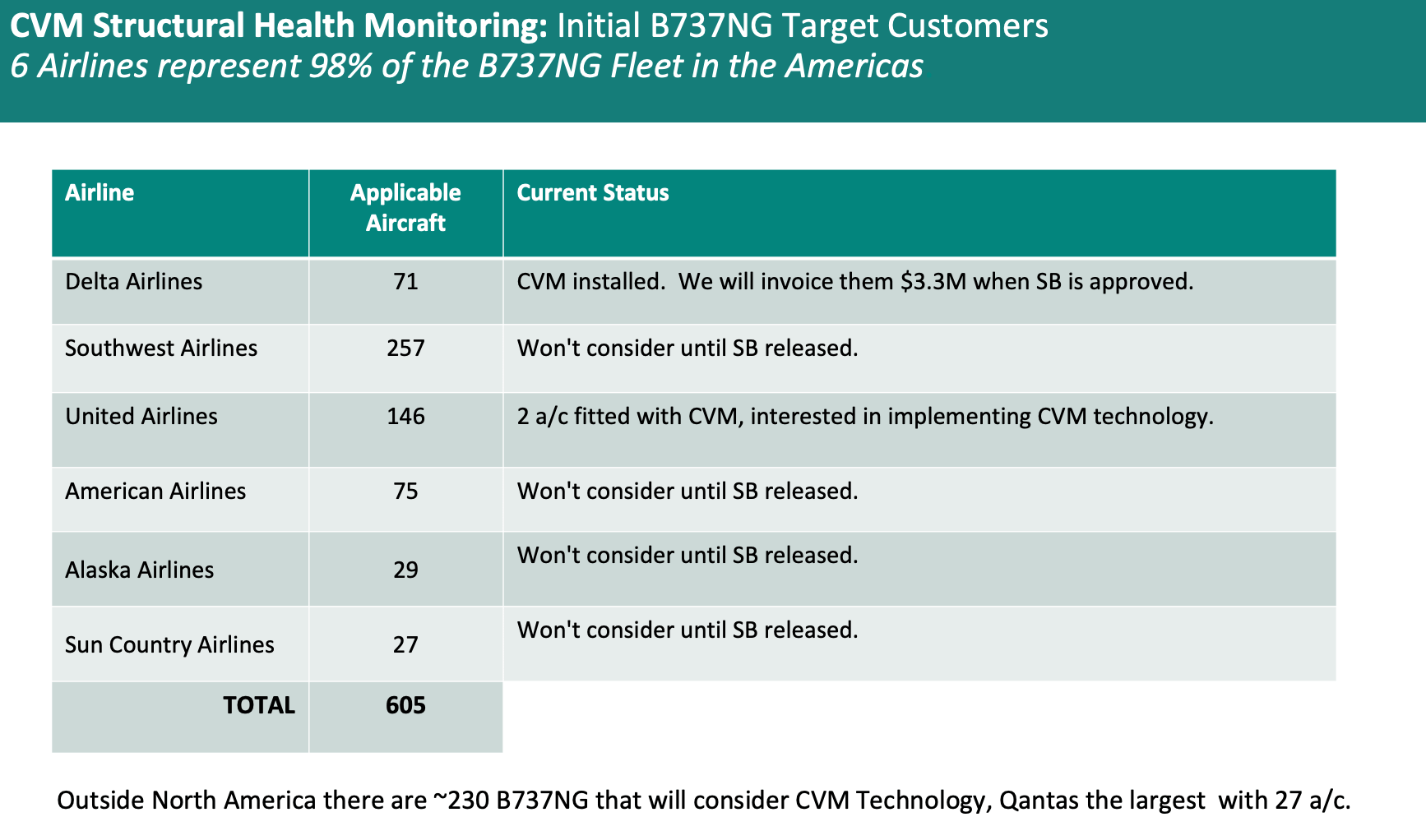
However, I view this as upside optionality rather than the core investment case.
The thesis should work without it.
Risks (What About The Downside?)
Customer concentration (~37% tied to a single customer in FY25). Mitigant: for avionics products, customers are “sticky” to the IP owner, and in contract manufacturing, a contract they decided to wind down, the client has requested to return, showing the quality of AEM engineers.
Relatively limited insider ownership from current management. Mitigant: Rick Freeman shows integrity and passion, soul in the game. Plus, the major shareholder (Mr Faillace) with a 15% stake (pre-2027 options) has a board seat since 2025.
Historical equity dilution to fund R&D and 24M listed options at AU$0.74 strike. Mitigant: SMN is now debt-free and profitable. If options are exercised by then, it means the stock has nearly doubled (validating our thesis and injecting fresh cash onto the balance sheet).
Execution risk (as always) in business expansion and possible M&As. Mitigant: products have been introduced over the years, as the recent MTP138 radio targeting the offshore industry. Furthermore, both past acquisitions were completed at highly attractive multiples.
There is the possibility that avionics proves more cyclical than I expect (MTP136D radio and CAL FIRE orders). Mitigant: launch of two new products for FY28, aftermarket services and software-type revenue.
I think we are well-protected here. The business has no debt, Avionics has proven to be profitable and resilient, and contract manufacturing has upgraded in quality. Furthermore, FAA approval on CVM is closer than ever, which is only a free upside in my thesis.
Skin in the game is 15% by the major shareholder. I imagine a significant re-rate might trigger some selling pressure from them. The rest is mainly institutional. No big ownership by Rick. This is a yellowish flag for the thesis.
Short-term Catalysts
Several developments could help close the valuation gap over the next 6–12 months:
FY2026 annual report showing cleaner profitability and margin expansion,
continued shift toward avionics revenue,
broader investor discovery and possible bolt-on acquisitions, and
FAA approval progress for CVM, initial commercial deployments with airline customers and targeting military aircrafts with simpler regulatory approvals.
If management continues to execute, I believe Mr. Market will increasingly be forced to value SMN based on its current earnings profile rather than its historical reputation.
Moving forward, I will be looking at:
the sustainability of high margins with current products,
the development of new products expected by FY28 as well as CVM’s FAA approval, and
the capital allocation, mainly R&D and bolt-on M&A, creating value for shareholders.
With best personal regards,
The Regnum Club with Carlos
THE REGNUM CLUB DISCLOSURE: LONG AT AU$0.39/SHARE. THIS IS NOT INVESTMENT ADVICE. I AM CARLOS, NOT YOUR FINANCIAL BUDDY. MAKE SURE YOU UNDERSTAND WHAT YOU OWN AND WHY. I HOLD NO OBLIGATION TO TELL YOU HOW I HANDLE MY POSITIONS. PLUS, THIS STOCK IS PARTICULARLY ILLIQUID. BE SKEPTICAL. DO YOUR OWN WORK. GOD BLESS.
Why would you post a photo of a ship bridge with DP systems when $SMN.AX does aerospace equipment